
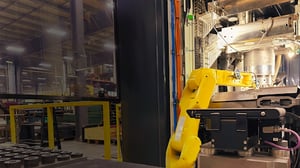
Atlas’s newest press, the Osterwalder OPP 2000, gives the team a clearer view into how powder metallurgy compaction behaves during production. The press uses electric servo driven motion and expanded data visibility to provide more precise control during each stage of the compaction stroke. That added insight helps Atlas monitor how powder responds inside the die as parts are formed.
Powder metallurgy compaction sets the tone for everything that follows in production. How a part is pressed affects how it behaves later during handling, sintering, and final use.
As designs grow more complex and dimensional expectations tighten, compaction becomes less forgiving. There is less room for variation during pressing, which places greater importance on consistent control at the press.
In many traditional setups, that control depends on manual adjustments and operator experience. When feedback during setup is limited, it can take time to dial in the process and repeat the same results across runs.
Newer press technology is changing that dynamic. Atlas’s investment in the OPP 2000 gives the team deeper visibility into compaction behavior and a more consistent way to manage the process as part requirements advance.
What Happens During Powder Metallurgy Compaction?
Powder metallurgy compaction is where a part starts to feel real. Loose metal powder is pressed inside a die until it forms a “green” part strong enough to move through the rest of the process.
At this stage, the tooling defines the part’s basic form, and the way pressure is applied directly influences how the material responds as it is compressed. The compact must reach enough strength to be handled ,transported, and processed without risk of damage.
This stage helps show how forgiving a design will be. As geometry becomes more involved,powder flow and response become more sensitive, and maintaining consistency at the press becomes more challenging.
Because compaction establishes the structure the part carries through the rest of production, control and clear visibility early on can make the rest of production far more predictable.
Where Traditional Compaction Approaches Fall Short
Many powder metallurgy programs still rely on compaction methods that haven’t changed much over time. For simpler parts, that can be enough. However, as designs become more demanding, the limitations start to surface.
In traditional setups, compaction often depends on manual adjustments and operator experience. With limited feedback during setup, it isn’t always clear what’s happening inside the die as parts are formed.
As a result, teams tend to run into the same challenges:
- Setup takes longer as trial runs add up
- Results shift between runs, even when the part stays the same
- Smaller issues are easier to miss early on
These issues don’t always stop production, but they do add friction. As expectations around precision and repeatability increase, traditional compaction leaves less room for variation.
How Is Press Technology Changing Powder Metallurgy Compaction?
Press technology is evolving to reflect the demands placed on modern powder metallurgy parts. Better motion control and clearer system feedback are changing how compaction is handled during setup and production.
Instead of relying almost entirely on manual adjustment, newer presses allow operators to see how the press is behaving as parts are formed. This visibility makes it easier to respond during early runs and reach stable production faster.
A Shift in Compaction Control
As press behavior becomes more predictable, compaction relies less on trial and error. Teams can approach setup with clearer expectations and carry those results across shifts and production runs.
This also changes how design discussions begin. With fewer unknowns at the press, engineers can assess feasibility earlier and move forward with a better understanding of what the process can support.
Atlas's New Press and Its Impact on Compaction
Atlas recently brought a new press online to support more demanding powder metallurgy compaction requirements. The Osterwalder OPP 2000 expands how compaction is controlled as part designs continue to evolve.
Osterwalder OPP 2000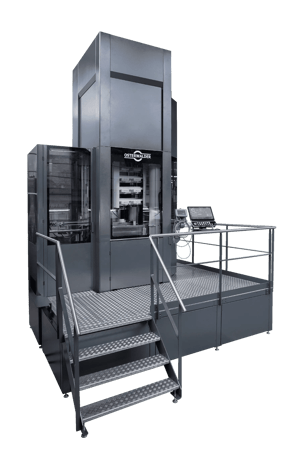
The Osterwalder OPP 2000 was selected to support higher levels of control during pressing, particularly for parts with added geometry or tighter expectations.
Electric Servo-Driven Compaction
The compaction stroke is driven by electric servo motors, with hydraulic assist used for ejection. This allows the press to respond more precisely during pressing, while still supporting parts that demand higher compaction forces.
Energy Behavior and Precision
Because the press relies on electric servo drives, energy use aligns directly with the pressing cycle. Power is applied when the press is actively compacting and drops off when it is not. This differs from traditional hydraulic presses and supports more consistent, efficient, repeatable compaction behavior.
How Setup and Tooling Affect Compaction Consistency
Setup plays a major role in how powder metallurgy compaction performs over the life of a program. As parts become more complex, the way tooling is prepared and adjusted influences both press availability and long-term consistency.
|
Area |
Traditional Press Setup |
Osterwalder OPP 2000 |
|
Tooling Setup |
Tooling is built and adjusted inside the press |
Die sets are prepared offline using cassette-based tooling |
|
Changeovers |
Press is unavailable during setup |
Next job can be staged while the press is running |
|
Operator Interaction |
Adjustments rely heavily on manual input |
System-guided adjustments based on real-time feedback |
|
Part Consistency |
Results vary between early runs |
Automatic compensation supports powder metal part consistency |
|
Program Flexibility |
Best suited for simpler parts |
Supports advanced powder metallurgy and complex geometries |
When setup activities and adjustments are handled outside the press, Atlas gains more flexibility in how new parts are evaluated. That capability allows design conversations to start earlier and with clearer expectations when programs place heavier demands on powder metallurgy compaction.

What This Expands for Atlas and Its Customers
Greater control over powder metallurgy compaction expands the range of parts Atlas can evaluate with confidence early on.
Parts That Benefit Most
This capability is especially relevant for:
- Structural powder metal parts
- Components with multiple pressing levels
- Designs that place tighter demands on compaction behavior
These parts often expose compaction sensitivities sooner, which increases the importance of precise press control and predictable performance.
Earlier, Clearer Design Conversations
With more consistent compaction control at the press, discussions can start sooner and stay focused on intent rather than process limitations. That shift helps teams assess feasibility without relying on adjustments later in production.
A More Direct Path to Production
For customers, this approach supports a smoother transition from concept to production. For Atlas, it allows more complex programs to move forward with clearer expectations around repeatability as complexity increases.
Compaction with Greater Clarity
Powder metallurgy compaction is easier to manage when press behavior is visible and repeatable. Clear feedback during pressing allows teams to make informed decisions earlier and carry that confidence through production.
With the addition of the Osterwalder OPP 2000, Atlas has expanded how compaction is controlled on the floor. The press supports more consistent behavior during pressing, which helps powder metallurgy compaction stay predictable as part designs grow more complex and expectations continue to increase.
Ready to Talk Through Your Part Design?
If you’re evaluating a part or considering how powder metallurgy compaction fits into your design, the Atlas team is ready to talk through your options.

COMMENTS