
The conventional powder metallurgy (PM) process, also known as press-and-sinter, involves four steps: mixing and blending, compaction, sintering, and secondary operations (when required). Each stage of production impacts final-part quality.
The compaction process in powder metallurgy plays a central role in shaping part properties like density, porosity, and strength. A closer look at this stage helps clarify how those outcomes take shape during production.
This article covers the fundamentals of powder compaction, including:
- Where compaction fits in the PM process
- What happens during die compaction and tooling
- How the die pressing process forms a green part
- What factors affect compaction
Where Does Powder Compaction Fit in the PM Process?
Each step of the powder metallurgy process involves many variables that impact the performance and longevity of your final component. Understanding the full process makes it easier to see where compaction fits and how it affects consistency and precision.
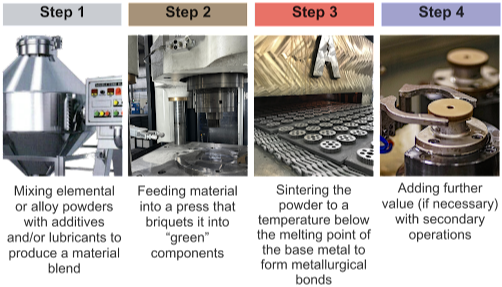
The conventional die pressing and sintering process includes four steps:
- Mixing the powder: Elemental or alloy metal powders are mixed with additives, such as lubricants or binders, to produce a uniform material blend.
- Compaction: A press puts the material under extreme pressure to form a compressed, "green" part with the desired shape.
- Sintering: A controlled-atmosphere furnace heats the powder to a temperature below the base metal's melting point to form metallurgical bonds, increasing strength and integrity.
- Secondary operations: If necessary, machining, heat treatment, and surface treatments add value by further refining performance or dimensions.
Read more about the PM process here.
Die Compaction: Process and Tooling Overview
In powder metallurgy, the compaction process is the shaping, deformation, and densification of a material via pressure from a tooling set. Die compaction, the most common means for shaping and densifying a powder, applies pressure through upper and lower punches to press a powder into a “green,” pre-sintered compact.
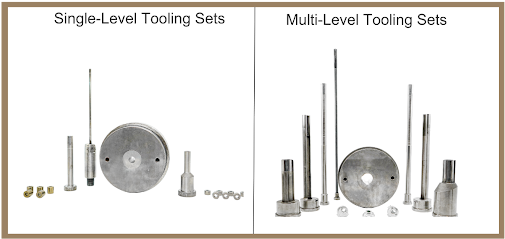
A compaction tooling set is designed for each custom component. A basic set of compaction tooling includes a die cavity, upper and lower punches, and a core rod. Tool designers create sets around powder specifications, press designations, and a part’s shape. As you can see above, there are sets for both single-level and multilevel tooling.
The Die Compaction Process
.jpg?width=300&height=240&name=Compaction%20Press%20Gear%20Parts%20(1).jpg)
Die compaction is a continuous cycle. Tooling motions during the die pressing process start in the fill position and then move through compaction and ejection stages. Each stage affects how the powder packs and how evenly density is distributed across the part.
The end result of this process is a compacted “green” component. The strength and density during this stage are referred to as green density and green strength. Green density in powder metallurgy is defined as the density after compaction, while green strength represents the strength of the as-pressed powder compact. For reference, these compacts have similar green strengths to Life Savers and Aspirin tablets.
4 Factors That Influence Powder Compaction
A key to understanding the aspects that influence compaction is knowing about compressibility. Compressibility is the capacity of a metal powder to undergo densification during applied pressure in a closed die. A material's compressibility is impacted by several factors the manufacturer can adjust to reach optimal conditions.
1. Particle Shape & Size
By definition, a particle’s size is less than 1 mm. Even at the microscopic level, size matters.
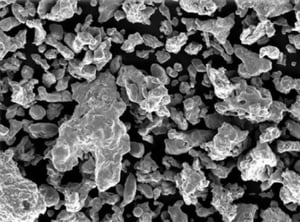
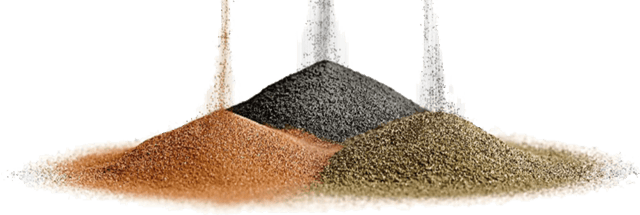
Particle size influences how well materials can be packed together. Particle shape influences flow, packing, and overall compressibility of the material blend during compaction. Irregularly shaped particles tend to pack together better than other shapes during the conventional pressing process.
2. Chemical Composition
Different alloys and elemental compositions tend to show varying compressibility behaviors. For example, elemental powder blends made with iron, nickel, or copper materials compact more easily than prealloyed materials.
3. Hardness
The hardness of your chosen material can impact compressibility. Harder materials are more challenging to deform, meaning they’re less compressible. Softer, more ductile particles can deform more easily during compaction.
4. Lubrication
The presence and amount of lubricants affects how well particles “slide” past each other during compaction (instead of stubbornly staying in place). The proper lubricant and processing can:
- Boost green strength
- Prevent work/strain hardening from heating
- Help with part ejection from the die, maintaining efficiency & shape integrity
- Reduce tooling wear, especially at higher compaction forces
- Increase compressibility
How to Improve Compressibility
Compressibility plays a significant role in the economical and effective production of powder metal components. Specific requirements for improving compactibility may vary based upon your part’s material or application.
Particle size and shape, chemical composition, hardness, and lubrication are all customizable for a smoother pressing process. Your best strategy may include:
- Changing lubricants – A solid lubricant can improve flowability and reduce friction between particles and the die, improving green strength, tool life, and dimensional control.
- Adjusting base material – Using atomized powder helps control particle size & shape consistency in structural components.
- Warm compaction – This reduces the particles' yield strength, allowing for a more deformable material.
Applying the Compaction Process in Powder Metallurgy
Small changes in compaction can shift density and directly influence part strength and performance. Those differences show up in how a component handles load, wear, and long-term use.
A better understanding of the compaction process in powder metallurgy helps guide material selection, tooling decisions, and process adjustments during production. With that visibility, it becomes easier to spot where refinements can improve consistency and overall results without complicating the process.
Keep Going
There’s more to unpack around powder metallurgy. Start with the rest of our blog library.

(This article was originally published in January 2022 and was recently updated to reflect current industry standards)
COMMENTS