
-1.png?width=300&name=Webpage%20Headers%20(17)-1.png)
Metal Parts Manufacturing:
Powder Metallurgy vs. Other Manufacturing Processes

What's the best way to manufacture a metal component?
The answer depends on your application, performance requirements, and production volume.
A wide range of metal manufacturing processes are used to produce precision components, including powder metallurgy, machining, casting, stamping, and forging. Each method offers distinct advantages and tradeoffs when it comes to cost, material utilization, complexity, and scalability.
These processes are widely used across industries such as industrial equipment, automotive, and power tools. However, selecting the right manufacturing method is where many engineers and sourcing teams face challenges, especially when balancing performance, cost, and manufacturability.
Some manufacturing methods, such as powder metallurgy (PM), are often overlooked or misunderstood. While PM has its own capabilities and limitations, it can deliver significant advantages when applied in the right scenarios, particularly for high-volume, complex components.
Powder metallurgy compares differently to traditional manufacturing processes depending on the application. This guide explains how the PM process works, where it fits among other manufacturing methods, and how it compares to casting, machining, stamping, and forging so you can make a more informed decision.
On this page, you'll learn:
-
How the powder metallurgy process works
- Where PM fits among other manufacturing methods
- Key differences between PM, machining, casting, stamping, and forging
- The main factors to consider when selecting a manufacturing process
What is the Powder Metallurgy Process
Powder metallurgy is sometimes underutilized compared to other production methods. To start, here's a quick overview of how the process works and where it delivers the most value.
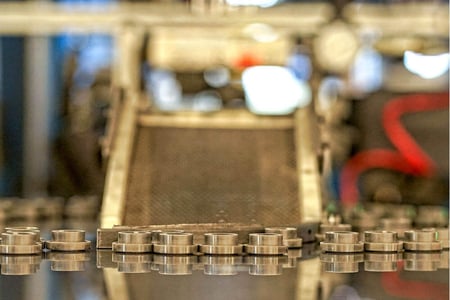
The powder metallurgy (PM) process produces components by compacting metal powder into a die and heating the material until the particles bond. This approach forms parts close to their final shape, reducing the need for extensive machining or material removal.
Because the material starts as powder rather than solid stock, manufacturers can produce complex geometries with high consistency and minimal material waste. Powder metallurgy is widely used to manufacture gears, bushings, structural components, and other high-precision parts across a range of production volumes.
Steps in the Powder Metallurgy Process



Why Manufacturers Use Powder Metallurgy
Common Powder Metal Components
- consistent part geometry at diverse production volumes
- efficient material usage, with scrap rates that can be as low as 3–5% in some applications
- complex shapes that are difficult to machine from solid metal
-1.png?width=200&height=200&name=Website%20Images%20500%20X%20500%20(18)-1.png "Website Images 500 X 500 (18)-1")
- Gears and sprockets
- Bushings and bearings
- Structural components
- Precision mechanical parts
Where Powder Metallurgy Fits into Metal Parts Manufacturing
Engineers evaluating metal component manufacturing options rarely consider a single process in isolation. Multiple manufacturing methods are typically evaluated when determining how a part will be produced.
Powder metallurgy is often assessed alongside other processes, with each offering distinct advantages depending on part geometry, production volume, material requirements, and cost targets.
Manufacturing Methods Used for Metal Parts
Each process forms metal parts in a different way. Some remove material from solid stock, while others shape metal through pressure, molds, or dies.
How Manufacturing Methods Compare
| Process | How Parts Are Formed | Typical Use Cases |
| Powder Metallurgy | Metal powder is compacted in a die and sintered in a furnace | High-volume production of gears, bushings, and structural parts |
| Casting | Molten metal is poured into a mold and solidifies | Complex geometries and thick-walled components |
| Machining | Material is removed from solid metal stock using cutting tools | Complex geometries and thick-walled components |
| Stamping | Sheet metal is pressed into shape using a die | Thin metal components produced in large quantities |
| Forging | Heated metal is shaped under compressive force | High-strength components for automotive, aerospace, and industrial equipment |
Factors to Consider When Selecting a Process
- Part geometry and design complexity
- Production volume
- Material requirements
- Dimensional tolerances
- Cost per part

Comparing Powder Metallurgy
to Other Manufacturing Processes
Powder Metal Versus Casting
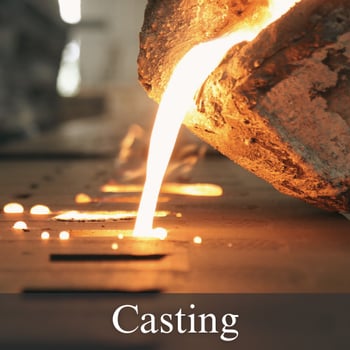
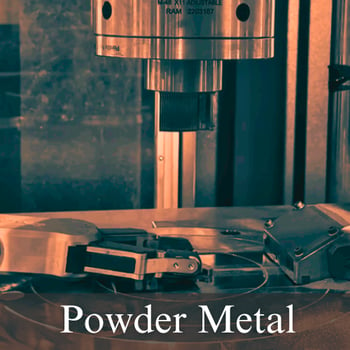
Casting and powder metallurgy are both ways to form finished components, but they do so differently. As production scales, the strengths of each process become easier to evaluate.
Casting forms parts by pouring molten metal into a mold, while powder metallurgy compacts metal powder into a die and bonds particles during sintering.
These differences become more apparent as parts move through production, especially when evaluating consistency, post‑processing requirements, and final part performance.
How They Compare in Production
| Criteria | Casting | Powder Metallurgy | Best Fit |
| Geometry | Supports complex external shapes | Forms features directly within the part | Depends on design |
| Machining | Often requires machining after solidification | Forms parts closer to final net-shape | Powder Metallurgy |
| Consistency | Can vary as molds wear or cooling changes | Maintains consistent geometry across production runs | Powder Metallurgy |
What Supports the Final Decision
When evaluating casting against powder metallurgy, teams often look at:
- Expected production volume
- Tolerance requirements
- Amount of post-processing required
Casting is often selected when part size, wall thickness, or overall geometry falls outside the limits of compaction tooling. Powder metallurgy becomes more attractive as volume increases and tighter dimensional control is required across production runs.
Powder Metal Versus Machining
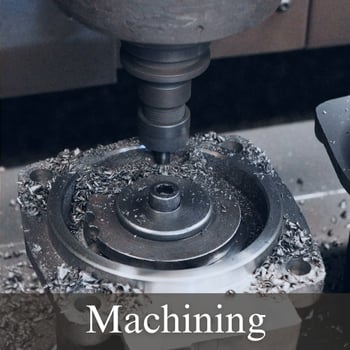
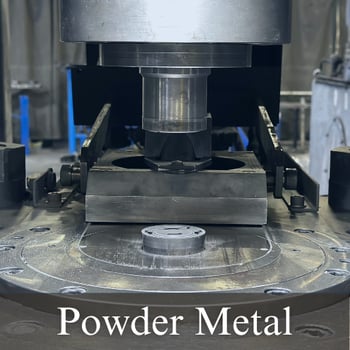
Machining and powder metallurgy approach metal part production in fundamentally different ways. Machining removes material from solid stock to achieve the final shape, offering flexibility early in a project’s life.
As production scales, material use and repeatability become more important. How each process handles those factors can influence the ideal manufacturing approach over time.
How They Compare in Production
| Criteria | Machining | Powder Metallurgy | Best Fit |
| Production Volume | Works well in early production and smaller batch runs | Better suited once volume supports tooling investment | Depends on volume |
| Flexibility | Allows design changes during production | Requires up-front tooling and stable design | Machining (early stages) |
| Material Use | Removes material from solid stock | Uses material more efficiently during forming | Powder metallurgy |
| Setup Complexity | May require multiple setups or orientations | Forms parts in a single pressing operation | Powder metallurgy |
Feature geometry can affect how a part is machined. Deep pockets and internal corners can be difficult to reach with cutting tools.
Additional operations may be needed to create those features. As complexity increases, parts may also need to be repositioned between operations.
Powder metallurgy forms features directly in the tooling. Splines, profiles, and other geometric details are created during compaction rather than cut afterward.
The same tooling is used to form each part, which helps maintain consistency throughout a production run.
What Cuts Into the Decisions
When comparing machining and powder metallurgy, teams often evaluate:
- Production volume and demand stability
- Cost per part as volume increases
- Number of setups or operations required
- Opportunities to reduce material waste
Machining is often used early in a product's life, when designs are still evolving, or quantities are low. As production stabilizes, forming the part instead of removing material can significantly improve cost efficiency.
Powder Metal Versus Stamping
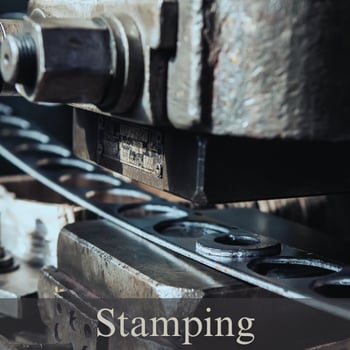
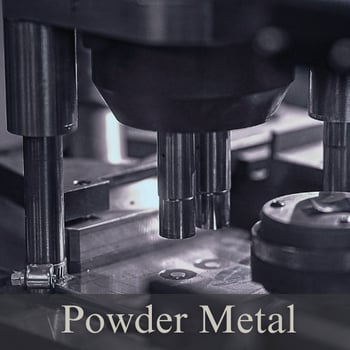
Stamping and powder metallurgy are both suited for high-volume production, but they handle material differently. Stamping cuts parts from flat sheet metal, which can limit part thickness and introduce scrap as designs become more complex.
How They Compare in Production
| Criteria | Stamping | Powder Metallurgy | Best Fit |
| Material Form | Starts with sheet metal and cuts material away | Forms parts by compacting powder | Depends on design |
| Part Thickness | Best for thin components | Supports more variation in thickness and internal features | Powder metallurgy |
| Scrap | Creates scrap during cutting | Uses material more efficiently | Powder metallurgy |
| Finishing | May require edge finishing | Forms more uniform surfaces during compaction | Powder metallurgy |
What Shapes the Decisions
When comparing stamping and powder metallurgy, teams often evaluate:
- Part thickness and geometry
- Interaction with other components in the assembly
- Scrap levels
- Finishing requirements
Stamping works well when the design stays within sheet-metal limits. As parts require more thickness control or internal features, other forming methods may offer advantages.
Powder Metal Versus Forging
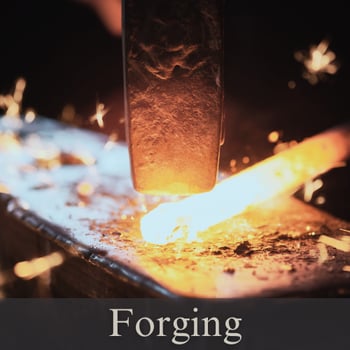
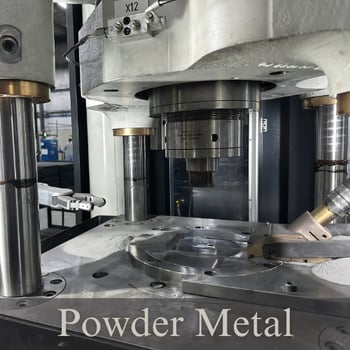
In some applications, powder metallurgy can also incorporate forging techniques. PM forging combines aspects of traditional wrought forging with the controlled starting point of powder-based materials.
Because the initial compact is already closely controlled in size and mass, PM forging can produce parts with more consistent material distribution compared to conventional forging, which often requires additional trimming or machining to remove excess material after forming.
This approach can be especially useful in applications where strength requirements are high, but consistency and reduced post-processing are also priorities.
Forging and powder metallurgy both shape metal through forming rather than cutting, but they apply heat and pressure differently. Forging deforms heated solid metal, while powder metallurgy bonds metal particles through sintering.
Forging is commonly chosen when maximum strength and density are required. Powder metallurgy offers greater control over geometry and consistency during forming, especially at higher volumes.
How They Compare in Production
| Criteria | Stamping | Powder Metallurgy | Best Fit |
| Strength | Produces dense parts with strong mechanical properties | Good strength depending on material and process | Forging |
| Fatigue Strength | Works well for components under heavy loads | Suitable for controlled, repeatable applications | Forging |
| Geometry | Limited by press capacity and die design | Supports more complex internal features | Powder metallurgy |
| Machining | Often requires machining after forming | Forms parts closer to final shape | Powder metallurgy |
What Presses the Decisions
When comparing forging and powder metallurgy, teams typically evaluate:
- Strength and load requirements
- Part size and overall geometry
- Machining required after forming
- Production volume and cost targets
Forging is often selected when strength is the primary driver. Powder metallurgy enters the discussion when consistency, geometry control, and production efficiency become priorities.
Choosing the Right Manufacturing Process for Your Part
Where Most Decisions Start
Early in a product’s lifecycle, process selection is typically driven by speed and flexibility. Machining is often the first choice to get parts off the ground quickly, while casting or stamping may also be considered depending on geometry and material. At this stage, the goal is simple: move the project forward, not lock in long term production decisions.
What Changes Over Time
As production continues, the conversation usually shifts.
- Volumes increase and demand becomes more predictable
- Production costs become easier to track
- Variation across parts becomes more noticeable
- Cycle time and throughput start to matter more
These changes tend to highlight where a different manufacturing process may offer advantages.
Taking a Second Look
Revisiting the process does not mean the original choice was wrong. It reflects how the project has evolved.
When designs stabilize and production becomes more consistent, forming methods like powder metallurgy can enter the discussion. In other cases, the original process continues to fit the application without needing adjustment.
The goal is not to force a change, but to recognize when it’s worth evaluating the options again.
Metal Parts Manufacturing:
Which Process Fits Your Part
Decisions around high-precision manufacturing tend to follow the part itself. As designs take shape and production moves forward, the process choice becomes clearer based on how the part needs to be made and how it will perform over time.
Looking at these decisions early helps keep options open. When the process aligns with the design, production can move forward with fewer adjustments as volume increases.
Get the Full Design Guide
To see how part design and process selection come together in real-world applications, download the powder metal design guide:

.png?width=300&name=Webpage%20Background%20(4).png)
Need Help with a Powder Metal Solution?
Speak with an Atlas Expert Today!

Need a Solution?
Ask Us a Question
Contact Information
Mailing Address
125 Tom Mix Dr.
P.O. Box P
DuBois, PA 15801
USA
Phone
Fax
Testimonial
“We have found Atlas Pressed Metals to be a solid organization that has a genuine commitment to the success of their customers. They have provided us with a great quality product and excellent service.”
- A Satisfied Customer, Supply Chain Manager | Hardware Industry